Trying to understand NDIS and its support schemes is akin to setting foot in a new country that expects its arrivees to fluently speak a strange new language. A language that is continually changing and yet to be concisely defined by a dictionary. There is no wonder that such confusion exists in the pursuit of understanding NDIS Supported Disability Accommodation and Supported Independent Living Services. This is a space that has continued to cause frequent frustration to applicants who seek to obtain funding from NDIS for housing needs. It’s not only clients who are confounded, but also therapists who struggle to understand the mysterious tangle of NDIS jargon and regulations surrounding supported living applications.
This article will assist any individual, client or therapist to untangle the basic elements of the SDA SIL entanglement.
It’s important to note at this stage that SDA and SIL are both providers of different services. Many providers such as Aruma (aruma.com.au) provide both services and some such as Summer Foundation’s Housing Hub (housinghub.org.au) offer only one or the other, SDA in the example of Housing Hub.
An SDA provider:
- Provides residents with suitable physical accommodation
- Sets and collects monthly rent
- Upkeeps accommodation in accordance with the Livable Housing Guidelines
- Notifies residents of any changes in service agreements
- Addresses feedback and complaints about accommodation
A SIL provider:
- Offers support in engagement of household and community activities
- Assists in household tasks such as preparing food
- Provides assistance to manage finances
- Manages SIL case workers
- Ensures workers are qualified
- Notifies residents of any service agreement changes
- Addresses feedback and complaints about the support provided
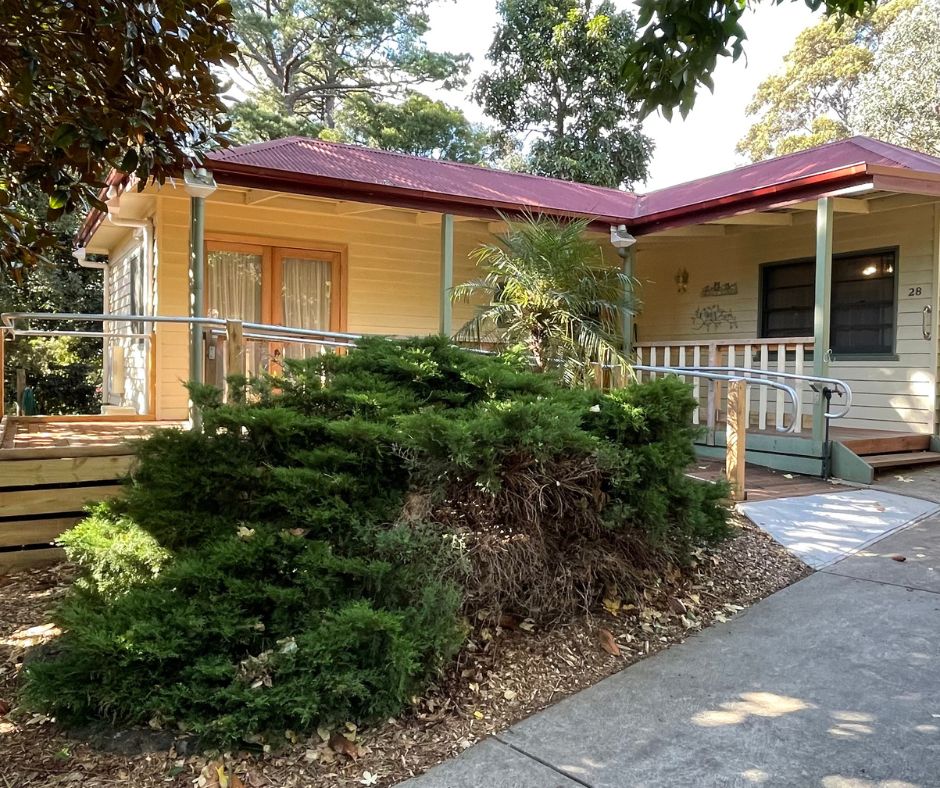
SDA provides the consumer with the brick and mortar property to dwell in, most suited to their needs and preferences. There are five basic dwelling types, entitled: basic, improved livability, fully accessible, robust and high physical support. They range from simple to complex living environments designed for a variety of low to high physical and psychological needs. The types of properties are defined as an apartment, villa/duplex/townhouse, house or group home dwelling. These properties must be maintained in accordance with the Livable Housing Guidelines, which provides Australia’s practice guidelines for housing.
SIL, on the other hand, is for people who need regular support to build independence skills and require frequent assistance with managing behaviours and complex medical needs. It’s divided into three levels of support: lower, standard and higher needs. The support includes: general supervision, assistance with self-care, administering medication, support with appointments, and support in community activities and transport.
SDA and SIL are funded separately in a participant’s plan, allowing consumers to have autonomy over their living arrangement and separate services. This means that SIL support workers can be changed without having to move house, whereas previously, support workers and supported accommodation were bound together. Participants now have greater flexibility under the NDIS to choose their accommodation and the organisations that provide their support.
At Kadia, with so many successes of SDA applications, 100% to be exact when the state average is 6%, we understand the must-have factors that appeal to NDIS report readers. We know how to deconfound the confusion that lays around such a tangled web of NDIS particulars. We have expertise and knowledge about all things SDA and SIL, including:
- Services
- Eligibility
- Inclusion and exclusion
- Providers
- Client rights
- Categories
- Dwelling types
- Guidelines
- And solutions.
Stay tuned to learn more about the world of Kadia Occupational Therapy. If you are an OT consumer or simply have areas of pending confusion about anything OT related, interventions or assistive devices, do not hesitate to get in contact with us.
Merryn Sperling
From The Kadia Team